DTF Printing on Dark vs. Light Garments: What You Need to Know
Last updated: September 21, 2026
Last updated: June 12, 2026
Quick answerDTF on dark shirts needs a white underbase layer that light shirts skip, and that layer typically adds $0.50–$1.50 per transfer to your unit cost. On light garments the white fabric does the job, so colors pop harder with less ink and a thinner feel. We run both every day here in Meridian and help customers choose based on shirt color, quantity, and budget before a single film gets printed.
A construction crew out of Nampa came in a few weeks back wanting a full-color logo on black polos. First thing they asked was whether it'd cost more than printing on white shirts. Honest answer: yes, a little, and the reason is worth understanding before you place your order. DTF transfers on dark garments need a white underbase layer that light-colored shirts don't require. That layer adds $0.50–$1.50 per transfer, makes the print slightly thicker to the touch, and changes a few things about how you should prepare the artwork. None of that is a dealbreaker. It just helps to know going in.
We've been running DTF here in Meridian for years and the dark-vs-light question comes up constantly. This post covers how both work, what to watch for in your design, and when a different print method might actually serve you better.
How DTF Printing Works
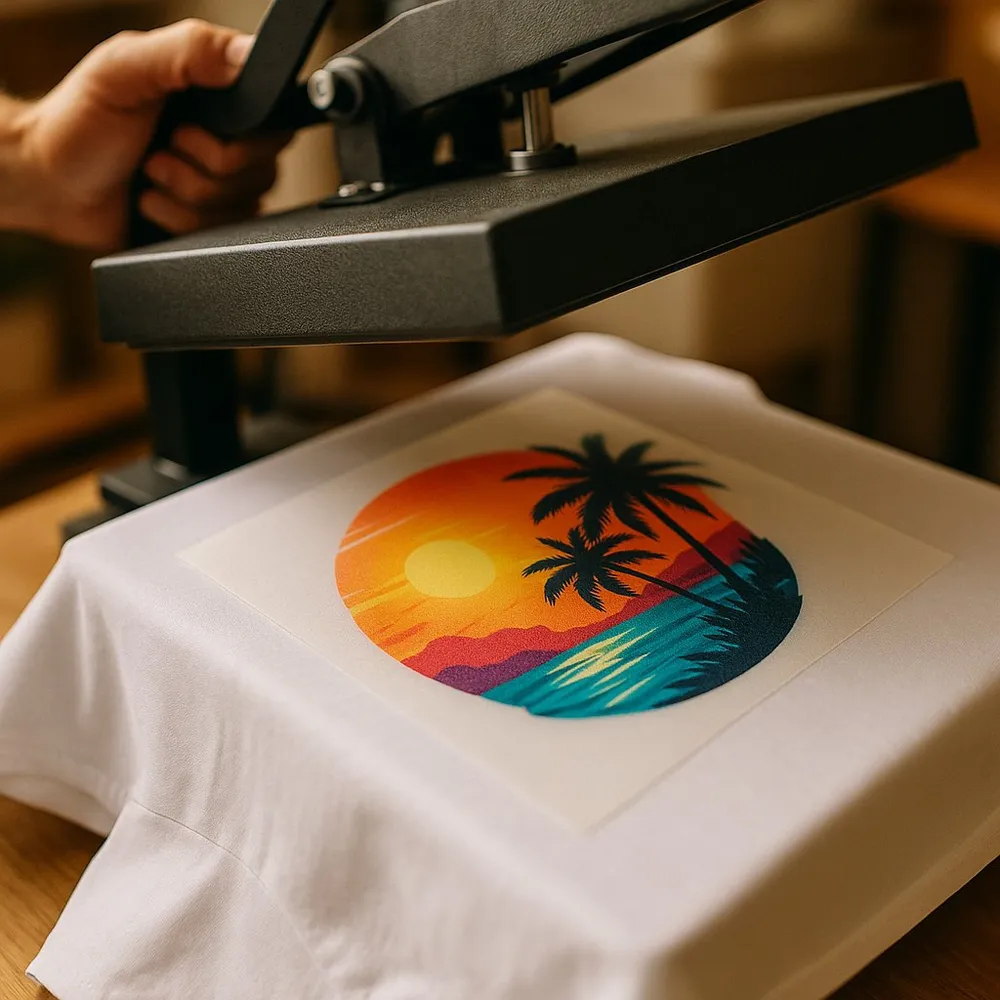
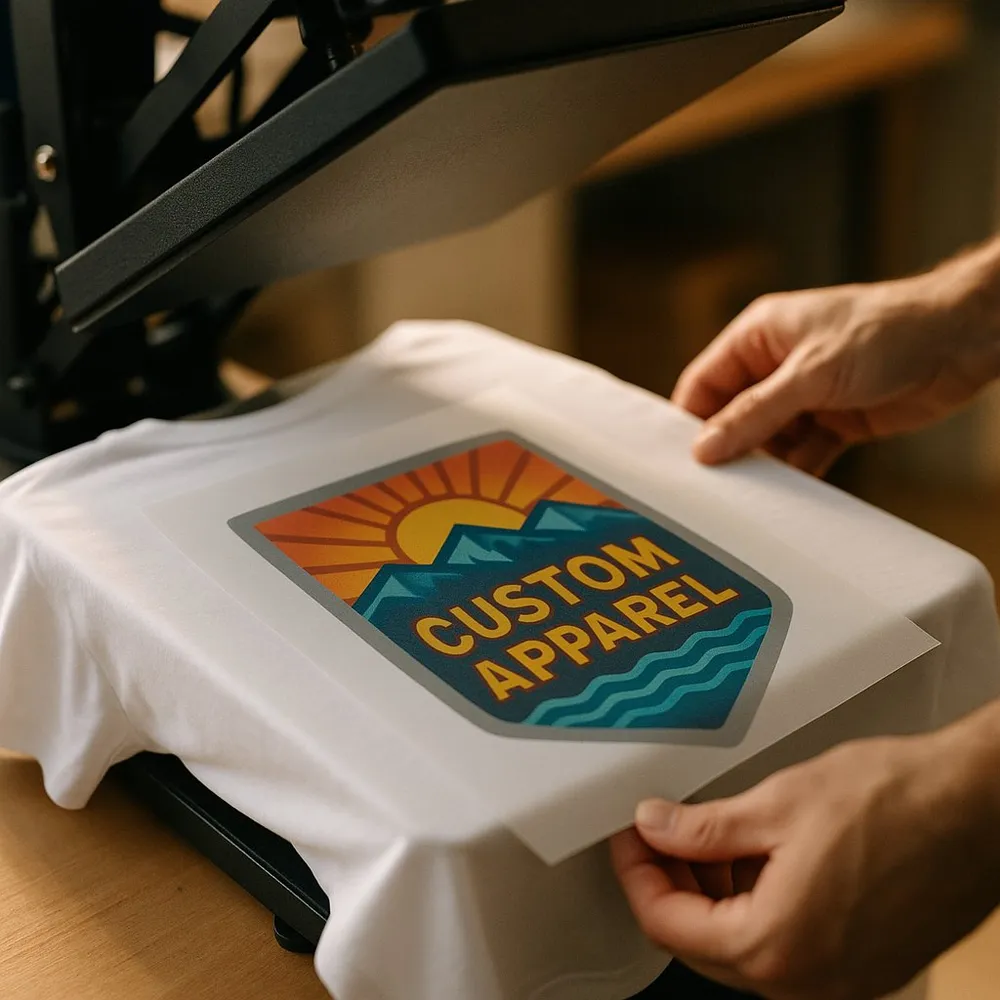
DTF doesn't print directly onto the fabric. Your design gets printed onto a special PET film using water-based inks, including a mandatory white ink layer. Hot-melt adhesive powder goes onto the wet ink, the film is heat-cured, and then the transfer gets pressed onto the garment with a heat press, bonding the whole thing to the fabric.
The white ink layer is the key detail here. Regular inkjet printing onto paper relies on the white paper as a background. Your garment can be any color, so the white ink creates an opaque base for the color inks to sit on. Without it, anything you print on a dark shirt would just disappear into the fabric.
DTF on Light-Colored Garments
On white, cream, light gray, or soft pastels, DTF tends to look great. The white garment itself acts as the underbase, so there's less ink layering involved and the print stays thin and smooth. Colors are vivid. Detail is sharp. Hair strands, thin outlines, gradients, halftones — all of it translates cleanly.
On a white shirt, a well-prepared full-color DTF print is honestly hard to tell apart from a high-quality screen print. For photographic artwork or anything with fine gradients, it actually beats screen printing.
- Colors are saturated because the white background gives them maximum contrast
- Hand feel is soft — thinner than plastisol screen prints, especially on quality transfers
- No ink bleed into fabric fibers the way some heat transfer vinyls can creep
- White design elements print cleanly as white, which isn't always guaranteed with other methods
One thing to keep in mind: DTF prints fully opaque. If you want the garment color to show through part of the design as a transparency effect, DTF isn't the right tool for that.
DTF on Dark-Colored Garments
Black, navy, forest green, burgundy — any of these work fine with DTF. The white underbase becomes essential rather than optional. Without it, your color inks would vanish against the dark fabric. With it, a bright red logo on a black shirt stays bright red. That's a big deal compared to some older methods like discharge screen printing, which can struggle to hold vibrancy on certain fabric blends.
The tradeoff is that the transfer sits up off the fabric a bit more. It's not dramatic, but it's noticeable if you're pressing the print between your fingers. (Most customers stop noticing after the first wash, for what it's worth.) The other thing to watch for is the transfer edge: where the print meets the dark fabric, there's a slight visible border if your artwork has loose clipping paths or extra white space baked into the design file.
- Colors stay vivid — the underbase opacity is what controls this, so good film quality matters
- The transfer is slightly thicker than on light garments. Normal. Expected.
- Edge preparation matters more — clip your design tightly and remove any white background from the artwork that isn't intentional
- Bold designs look phenomenal — solid colors on a good underbase almost glow against dark fabric
Design Tips for Each Scenario
Designing for Light Garments
You've got a lot of freedom here. Almost any artwork translates well. Just remember DTF is fully opaque, so don't design expecting any portion of the shirt color to show through the print area. If you want a softer, more vintage look, ask us about dialing back the white underbase opacity. It's a small tweak but it changes the feel meaningfully.
Designing for Dark Garments
Tight clipping paths are your best friend. Only the white that's intentionally part of your design should print — any stray background white in the file will show up as a white box or halo against the dark fabric. Avoid thin wispy edges that could create that unintended halo effect.
Lean into what DTF does well on dark: bold outlines, solid color fills, photographic prints. A vivid photo print on a black shirt is one of the most eye-catching things we produce. Full-bleed photography on dark fabric is an area where DTF genuinely has no good competition at low quantities.
DTF vs. Screen Printing on Dark Garments
Before DTF got widely accessible, printing on dark garments meant screen printing with a white underbase — which is accurate but expensive and requires volume to make financial sense. The two methods aren't identical, and for the right job, screen printing still wins.
- Minimums: DTF has none. Screen printing typically needs 24–36 pieces before it pencils out.
- Color count: DTF handles unlimited colors at a flat rate. Screen printing charges per color, so a 6-color logo gets expensive fast.
- Hand feel: A premium plastisol screen print on dark fabric is very flat and smooth. DTF is slightly more textured, especially on dark substrates.
- Durability: Both hold up well through washing. Wash inside-out in cold water either way.
- Small run cost: DTF wins clearly. No setup fees, no minimum charge, no color separation cost.
- Large run cost (100+ pieces, simple design): Screen printing often beats DTF on per-piece price at that scale.
For a typical small-business order — say, 30 black tees with a 3-color logo — DTF is usually the faster and cheaper path. Once you're pushing 150 pieces with a simple 2-color design, it's worth getting a screen print quote to compare.
Color-to-Color: Specific Combinations Worth Knowing
Not all color-on-color combinations perform identically. A few notes from what we see regularly:
- White on black: One of the cleanest results DTF produces. Crisp, high-contrast, no surprises.
- Yellow on black: Vivid. The underbase ensures full saturation so you don't get that muddy-gold effect.
- Red on navy: Excellent separation. Clear, distinct colors.
- Neon colors on dark: DTF handles this better than most other methods at small quantities.
- Pastels or muted tones on dark: Works, but the contrast differential can soften the look slightly. If your brand uses dusty rose or sage green, try running a slightly more saturated version of the color in your file before committing to a big run.
Caring for DTF Printed Garments
DTF transfers are durable with basic care. Wash inside-out in cold water, skip the bleach and harsh detergents, tumble dry on low or hang to dry, and don't iron directly on the print. Same rules apply whether the shirt is black or white.
Order DTF Prints from Eagle Ridge Apparel
We print DTF on any garment with no minimum order — single pieces are fine. We've been doing this in Meridian for 7 years, hold a 4.9★ rating on Google, and ship nationwide from our Treasure Valley production floor. Send us your artwork and shirt color and we'll tell you exactly what to expect before anything gets pressed. Reach out or request a quote online.
Frequently asked
Does DTF printing on dark shirts cost more than light shirts?
Yes. Dark shirts need a heavier white underbase, which adds roughly $0.50–$1.50 per transfer in ink and film cost. Light shirts skip or reduce that layer, so the unit price stays lower.
Will DTF colors look the same on a black shirt vs. a white shirt?
Close, but not identical. On dark shirts the colors sit on top of a printed white underbase, so vibrancy depends on how opaque that base is. On white or light shirts, the fabric is the background and colors typically appear slightly brighter with a thinner hand feel.
Where can I get DTF transfers printed locally in the Boise area?
Eagle Ridge Apparel prints DTF in Meridian, ID with no minimums and same-day rush available on most orders. Reach out or request a free quote online.
Ready to start your order?
Send us your idea and we'll come back with mockups, pricing, and a real turnaround date within 24 hours.
Get a Quote contact usHow We Make This Stuff
Everything covered in this post is produced in our Meridian, Idaho shop at 2700 E Lanark St. Eagle Ridge Apparel is a family-run print shop serving the Treasure Valley since 2019 — we embroider, screen print, DTF, sublimate, laser-cut leather patches, laser-engrave drinkware, and UV-print promotional goods on equipment we operate ourselves. No outsourced decoration, no overseas fulfillment, no third-party middlemen.
Most custom apparel orders ship in 7–10 business days from approved mockup. Rush production in 3–5 business days is available on most decoration methods; embroidered hats are the tightest constraint. We hold no minimums on any decoration type — order one piece or one thousand — though pricing scales aggressively over 50, 100, and 250-piece tiers. Free digital mockups before production starts. We don't begin a run until you sign off on what it'll look like.
Two ways to order: design it yourself online in our designer tool (any quantity, any decoration method), or request a custom quote and we'll send back pricing within one business day. Talk to a real person — email info@eagleridgeapparel.com or send us a message, and most inquiries get a response within two hours during the business day.