Last updated: June 12, 2026
Quick answerBooster club fundraisers in Boise and Meridian typically clear 55–65% margin on custom t-shirts and up to 70% on leather-patch hats when orders are pre-sold before production — meaning zero inventory risk for your club. Eagle Ridge Apparel in Meridian, ID has run 136+ online team stores for local clubs and publishes exact 2026 per-piece costs so treasurers know the profit before a single order is placed. Hoodies deliver the highest dollar-per-sale return at $15–$18 profit each, making a three-item store (tee, hoodie, hat) the standard setup for clubs clearing $2,000–$5,000 per fundraiser.
Every fall, a youth football booster parent walks into our shop in Meridian asking some version of the same question: how do we actually make money on this? Not break even — make money, enough to cover tournament entry fees or a new scoreboard. The answer is almost always the same: pre-sold apparel, zero inventory, your markup baked into checkout. We've run 136+ online team stores for clubs across the Treasure Valley, and the numbers below are exactly what we quote to treasurers before a single shirt gets printed.
What custom merchandise has the best profit margin for fundraisers?
Custom t-shirts give you the best combination of margin and sell-through: roughly 55–65% margin selling at $20–$22 against a $7–$9 printed cost. Hoodies earn the most actual dollars per sale ($15–$18 profit each), and leather-patch hats are your highest-margin premium item, clearing 60–70% at a $28–$32 price point. Most successful booster stores sell all three.
2026 fundraiser profit margins by product
| Product | Your cost (printed) | Typical sell price | Profit per item | Margin |
|---|---|---|---|---|
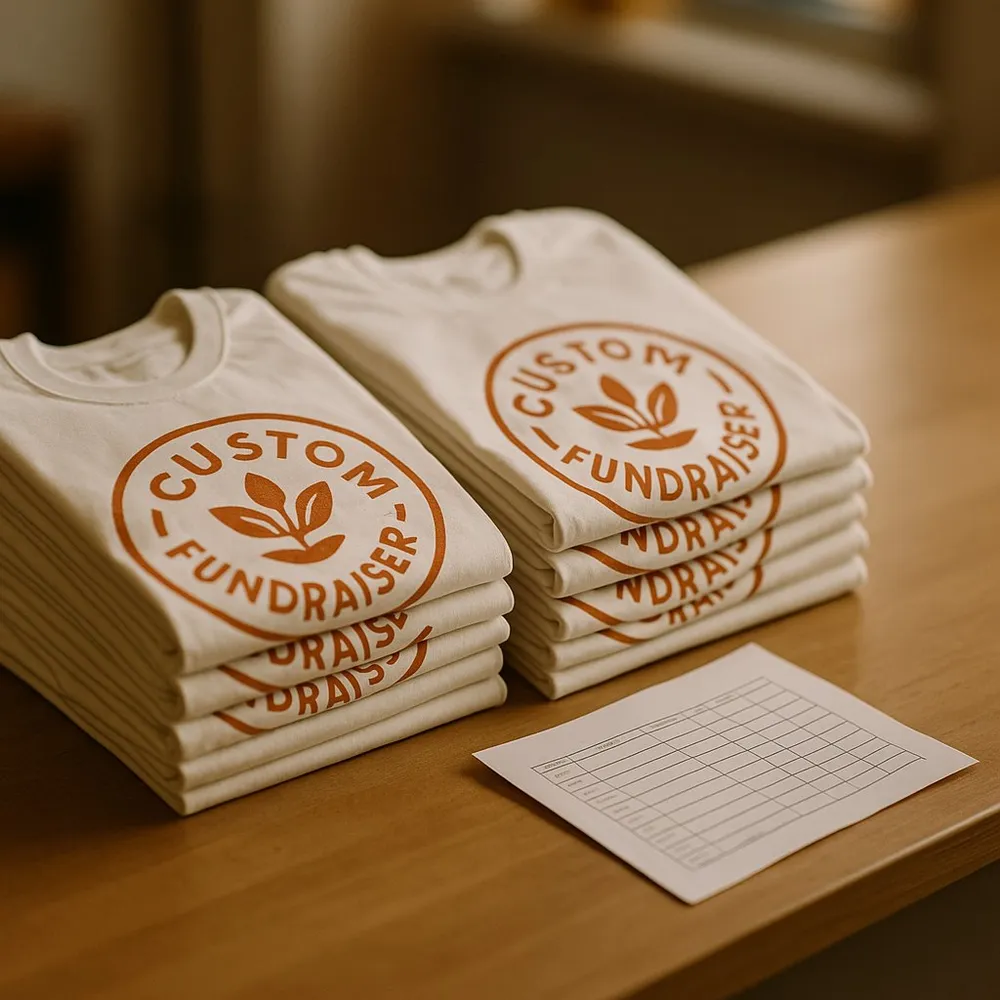
| Cotton t-shirt (1-2 color print) | $7–$9 | $20–$22 | $12–$14 | 55–65% |
| Soft-style tee (full-color DTF) | $9–$11 | $24–$26 | $13–$16 | 55–60% |
| Hooded sweatshirt | $17–$20 | $35–$38 | $15–$18 | 45–50% |
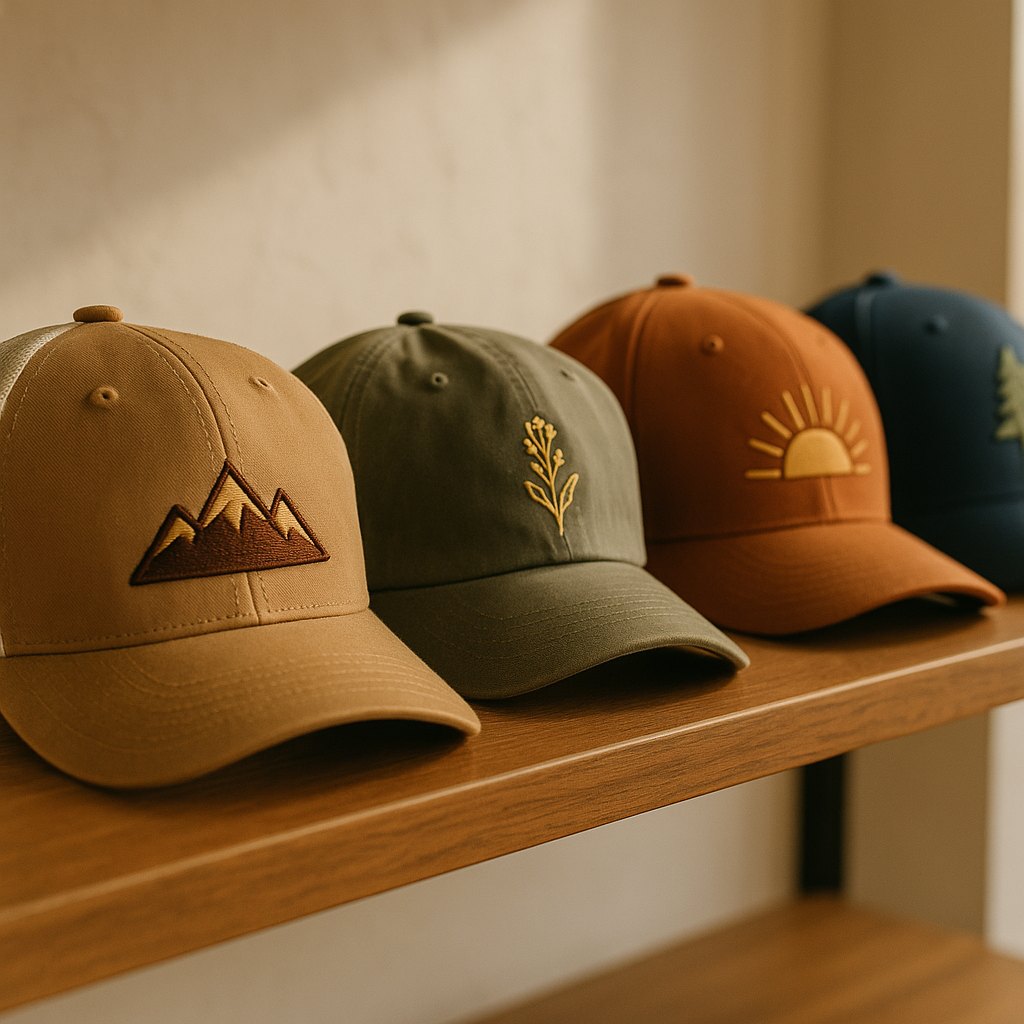
| Leather-patch hat | $10–$12 | $28–$32 | $16–$20 | 60–70% |
| Embroidered beanie | $8–$10 | $20–$24 | $10–$14 | 50–60% |
| Car decal / sticker | $1–$2 | $5–$8 | $4–$6 | 70–80% |
Numbers reflect typical Treasure Valley pricing through our team stores in 2026, at common fundraiser quantities (24–150 pieces) with no setup fees and free digitizing. Stickers have the highest percentage margin but t-shirts and hoodies raise far more total dollars per supporter.
Why the paper order-form model keeps failing
The old model — pre-order sheets at every game, checks collected by team parents, a spreadsheet the treasurer updates at midnight — breaks down the same way every time. It's not bad luck. It's the system.
- Money handling. Cash and personal checks create accounting friction. The treasurer becomes the bottleneck for every payment.
- Sizing mistakes. Order forms get filled out wrong, sizes get mixed up at distribution, and you're left with inventory the booster club has to eat or discount.
- Distribution chaos. Coaches end up sorting 80–120 garments by family at the end-of-season banquet because nobody had time before. Items get lost. Wrong people get wrong items.
- Time cost. Officers spend 20–40 cumulative hours per fundraiser cycle on a project that nets the club $400–$800. The hourly return is brutal.
- One-shot revenue. You run one fundraiser per season, usually around homecoming or playoffs. Outside that window, nothing.
How an online team-store fundraiser actually works
The model has three moving parts: a custom-branded online store, your fundraising markup baked into the pricing, and us handling production and fulfillment. The flow is straightforward.
We build the store in 24–48 hours after you send your logo, sport list, and product preferences. You send a link to your parent roster. Parents order on their own time, pay with their own cards, pick their own sizes. (We see the fewest sizing complaints on team stores compared to any other order type, and I think it's just because parents are entering their own data instead of handing a paper form to a seven-year-old.)
The store stays open 10–14 days. When it closes, we batch everything, print and ship within 5–7 business days, and send the club a check for the difference between what customers paid and our production cost. Your treasurer never touches a dollar.
The markup math — what your fundraiser actually nets
Here's what we see across Treasure Valley booster clubs at typical quantities:
- Shirts ($14–$22 production cost): $4–$7 markup per piece
- Hoodies ($28–$42 production cost): $7–$12 markup per piece
- Embroidered hats ($14–$22 production cost): $4–$8 markup per piece
- Premium gear (jackets, vests, performance wear): $10–$18 markup per piece
For a typical high school booster club with around 80 active families and a balanced order mix, expect 100–150 items per cycle at an average $5–$7 markup. That's $500–$1,050 net revenue per cycle with essentially zero officer time during the window itself.
Run three cycles per year instead of one — preseason, mid-season, playoff push — and you're looking at $1,500–$3,150 in annual apparel fundraising. Enough to cover a full coaching stipend, tournament entry fees, or championship-week travel.
Tax treatment for booster club fundraising revenue
This is general guidance, not tax advice. Talk to your CPA or check the IRS 990 instructions for your specific situation.
Most high school athletic booster clubs operate as 501(c)(3) nonprofits. Apparel fundraising revenue typically falls into one of two buckets:
- Substantially related to exempt purpose. If the apparel directly promotes school spirit and supports student athletics, revenue usually isn't considered unrelated business income and isn't subject to UBIT.
- Unrelated business income. If the club runs apparel sales like a general retail operation with no clear connection to athletic support, revenue may be subject to UBIT above the $1,000 annual threshold.
The cleanest structure: restrict store access to your athletic program's community — parents, students, alumni, supporters of those specific sports. Most online team-store platforms support password gating or private URLs that make this easy to document.
Picking the right products for your store
The mix matters more than the individual items. Three things worth knowing from running these cycles for years:
Anchor on your cheapest item. Most parents order one t-shirt. Some order multiple shirts plus an upgrade. Make sure your entry-level item is appealing on its own — don't treat it like filler.
Offer one or two premium upgrades. Embroidered jackets, full-zip hoodies, performance pullovers in the $50–$80 range. Your highest-margin orders come from upgrade buyers, and those options need to be visible.
Include youth sizes. Younger siblings buy too. Sibling sales are consistently significant on every booster store we run — don't leave those out.
When to run each cycle for maximum participation
- Preseason (4–6 weeks before season start). Parent enthusiasm is at its peak. This is your highest-participation window of the year.
- Mid-season (around homecoming or a major tournament). Reorder cycle for families who bought preseason, first-purchase cycle for anyone who didn't.
- Playoff push (if the team advances). Time-sensitive championship gear creates urgency. Smaller participation, but higher per-piece markup.
- Off-season alumni and banquet cycle (April–May). Graduating seniors' families buy as keepsakes. Alumni who want to support the program show up here too.
Mistakes that kill booster fundraiser participation
- Too many product options. Six to ten items is the sweet spot. Thirty items overwhelms parents and tanks conversion.
- Markup set too high. A $15 markup on a $20 shirt feels predatory and people don't buy. Keep markup at 20–40% of production cost.
- Order window too short. Less than seven days excludes parents who don't check email daily. Ten to fourteen days hits the right balance.
- Single-touch promotion. One announcement at a game or one email underperforms by 40–60%. Email blast plus a social post plus a text reminder near close is the standard that works.
- Cheap garments. They produce returns and complaints. Mid-tier blanks like Next Level, Bella+Canvas, and Independent Trading Co. hit the sweet spot on quality and price.
Ready to set up your booster fundraiser?
We run booster apparel fundraisers for high school athletic clubs across the Treasure Valley. Free store setup, no monthly fees, your markup written into pricing, and a check cut to the booster club after each cycle closes. See our team stores hub for the full platform overview, or call or text to talk through your specific program.
Frequently asked
How much profit can a booster club make on custom hoodies?
A booster club selling custom hoodies at $40–$45 against a $22–$28 printed cost keeps $15–$18 per piece — the highest per-item dollar return of any common fundraiser product. A store that moves 100 hoodies clears roughly $1,500–$1,800 before any other items are counted.
Do we need to order inventory upfront for a team store fundraiser?
No. Eagle Ridge sets up a pre-order store where supporters buy first and production starts after the window closes, so your club never holds inventory or risks unsold stock. The store typically runs 7–14 days, then orders are printed and shipped within 7–10 business days.
Can Boise and Meridian booster clubs pick up orders locally?
Yes. Eagle Ridge is in Meridian, ID and we serve clubs across the Treasure Valley — Boise, Nampa, Eagle, Kuna, and everywhere in between. Local pickup is available, and same-day rush printing is possible on most in-stock items. Reach out to confirm your timeline before you launch the store.
Ready to start your order?
Send us your idea — we'll come back with mockups, pricing, and a real turnaround date within 24 hours.
Get a Quote contact usHow We Make This Stuff
Everything covered in this post is produced in our Meridian, Idaho shop at 2700 E Lanark St. Eagle Ridge Apparel is a family-run print shop serving the Treasure Valley since 2019 — we embroider, screen print, DTF, sublimate, laser-cut leather patches, laser-engrave drinkware, and UV-print promotional goods on equipment we operate ourselves. No outsourced decoration, no overseas fulfillment, no third-party middlemen.
Most custom apparel orders ship in 7–10 business days from approved mockup. Rush production in 3–5 business days is available on most decoration methods; embroidered hats are the tightest constraint. We hold no minimums on any decoration type — order one piece or one thousand — though pricing scales aggressively over 50, 100, and 250-piece tiers. Free digital mockups before production starts. We don't begin a run until you sign off on what it'll look like.
Two ways to order: design it yourself online in our designer tool (any quantity, any decoration method), or request a custom quote and we'll send back pricing within one business day. Talk to a real person — email info@eagleridgeapparel.com or send us a message, and most inquiries get a response within two hours during the business day.